
Your Cart
Clear Dome Cake Containers: How to Size and Specify Packaging That Delivers Celebration Cakes Intact
A celebration cake is the only product you sell that cannot be replaced if it fails. Nobody reorders a birthday cake for next Tuesday — the party is today, and a cake that arrives with the frosting pressed into the lid is not a refund, it is a ruined occasion. As bakeries sell more through delivery and online ordering, the container has become the difference between a repeat customer and a public one-star story.
Marketplace reviews tell an uncomfortable story: the most common complaint about cake packaging is not breakage — it is size mismatch. Cakes that do not fit, domes that crush decorations, bases that are wider than the box they were promised to match. This article walks through how to size and specify a clear dome cake container so the cake you bake is the cake that arrives.
Why the Clear Dome Is the Default Format for Celebration Cakes
Celebration cakes are decorated exactly where a flat lid would sit: piped borders, fruit crowns, cream rosettes. A dome gives that decoration headroom while the clear material turns the container into a display case — the customer sees the whole cake before opening anything, which matters both on a bakery shelf and when the delivery box is opened at the door.
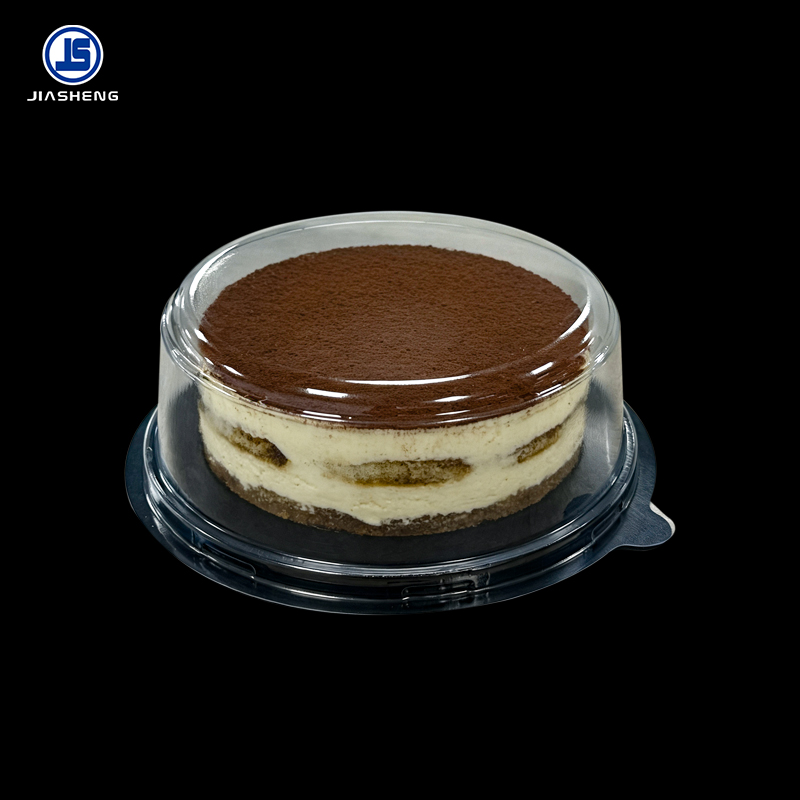
The dome shape also behaves well structurally: a curved surface resists crushing better than a flat panel, so stacked containers put load on the dome's shoulders rather than on the frosting below. That is why the format has become the default for everything from cheesecakes to fruit-topped cream cakes.
Sizing: the Three Measurements That Decide Everything
Size complaints start with a simple mistake: matching the container to the cake's tin size instead of its finished dimensions. Three measurements need to be checked together:
Finished diameter, not tin diameter: Filling, crumb coating, and piping all add material. An "8-inch cake" often finishes at 210–220 mm or more once decorated.
Decoration height: Measure to the top of the tallest element — fruit, toppers, and piped peaks included — and add clearance so the dome never rests on frosting. The container below has a stated internal height of 75 mm, which is the number to compare against your decoration, not the cake body alone.
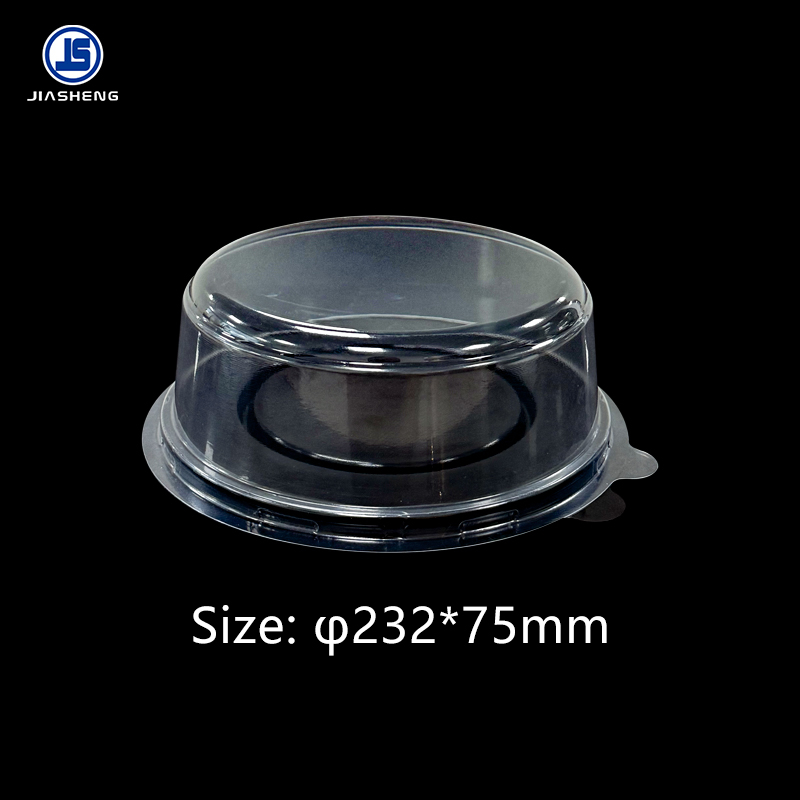
Base and board together: The cake sits on a board, and the board sits in the base. A φ232 mm footprint like the one above is sized for a standard 8-inch finish with working clearance; a snug base stops the cake from sliding, which is what actually smears sides in transit. For that size class, purpose-built 8-inch round cake containers remove the guesswork entirely.
Structure: What Carries the Cake Through Delivery
The dome gets the attention, but the base does the structural work. A rigid, slightly recessed base cradles the cake board and stops lateral movement — the cause of most smeared sides. The photo below shows the pairing that works: a deep, stiff black base with a raised rim that locks the dome in place around its full circumference.
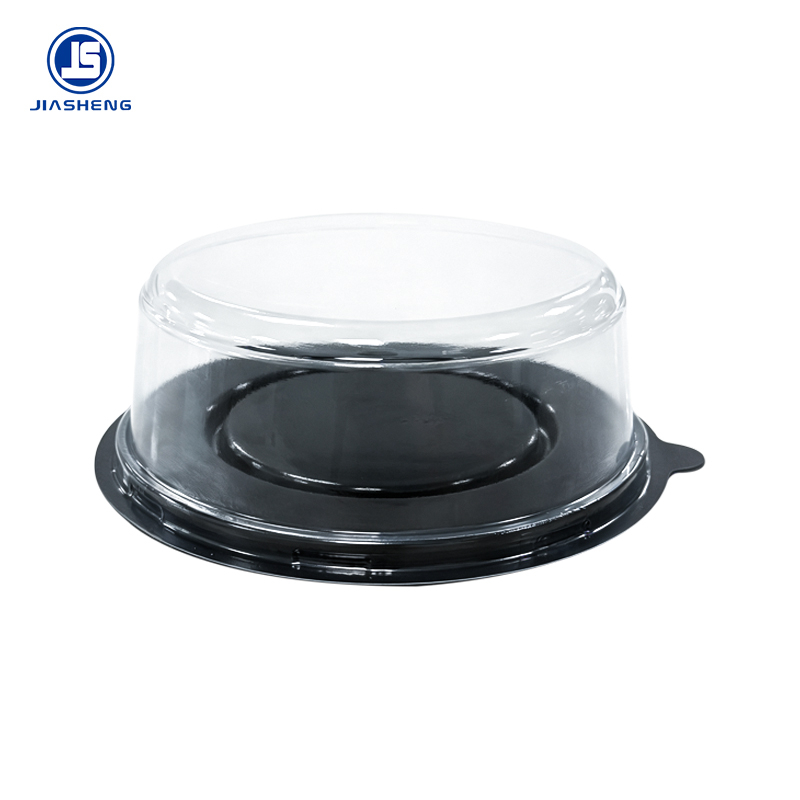
Two more details to confirm: the lock. A perimeter lock with multiple engagement points keeps the dome seated through courier bags and door drops; a loose push-fit walks open with vibration. And stackability: delivery bags stack, so the dome needs to carry load without transferring it to the cake. Round cake containers with locking lids that pass a simple five-high stack test with a loaded cake on the bottom are the ones worth ordering in volume.
One Format, Two Business Models
The same dome container serves two very different buyers, and it is worth knowing which one you are:
Bakeries and foodservice (disposable): Volume, consistency, and cost per unit dominate. You need a format that exists in every size you sell, seals the same way every time, and presents the cake without staff assembly time.
Home bakers and small studios (reusable): Order sizes are small, and customers often keep the container for storage or return transport. Food-grade material quality and a clean, premium look carry more weight than per-unit price.
Formats like food-grade cake containers with clear dome lids, specified for both reusable and disposable use sit exactly on this line: rigid enough to be reused for storage at home, cheap enough to run as single-use at bakery volume. One SKU covering both is one less format to stock.
Pre-Order Checklist
Before committing to a volume order, confirm six things:
1. Fit-test with a finished cake — decorated, board and all — not a bare sponge.
2. Check internal height against your tallest decoration, with clearance to spare.
3. Verify the base and board combination you actually use fits without rocking.
4. Run the lock test: closed-container drop and a five-high stack with a loaded bottom tray.
5. Confirm food-grade compliance for your market, including chilled display use.
6. Order samples first: established dome formats are usually available through free sample services, so the fit test costs you a delivery, not a tooling invoice.
Four Questions to Ask a Cake Container Supplier
1. What are the true internal dimensions? Diameter and height at the narrowest point — not the outer footprint. This is where size complaints are born.
2. Which cake sizes is each format actually cut for? A supplier who knows their range will tell you an 8-inch finish, not an 8-inch tin.
3. Has the dome been stack-tested loaded? The answer should reference weight on the bottom container, not empty stacking.
4. Can heights or diameters be customized? If you sell a signature tall cake, the supplier should be able to extend the dome rather than force the decoration down.
Frequently Asked Questions
Will a dome container protect a two-layer celebration cake? Yes, provided the total height — layers plus board plus decoration — stays under the dome's internal height with clearance. Measure the finished cake; that is the number that matters.
Do these containers work for chilled display? Food-grade PET-style domes handle refrigerated display well. Avoid hot-fill or direct oven use; these are serving and transport containers, not bakeware.
Why does my cake slide inside the container? Almost always a base that is too wide for the board. The board should sit in the recessed center of the base with minimal side play — lateral movement, not crushing, is the most common transit damage.
Are clear dome containers recyclable? Clear food-grade plastic generally sits in the most widely accepted recycling stream. Confirm the material and local rules with your supplier if recyclability messaging matters to your brand.
Can I get containers printed with my bakery's branding? Yes — printing and custom colors are standard options at manufacturing volume, though most bakeries start with stock clear formats and add branding once volumes justify tooling.
The Bottom Line
Cake delivery failures are sizing failures before they are strength failures. Match the container to the finished, decorated cake; check internal height and base fit; test the lock and the stack with real weight. Do that with samples before you order in volume, and the container disappears from your reviews — exactly where you want it.
Need Cake Containers That Fit the Cakes You Actually Bake?
Clear dome formats from 6 to 10 inches, food-grade materials, free samples before you commit.
Request Free Samples